

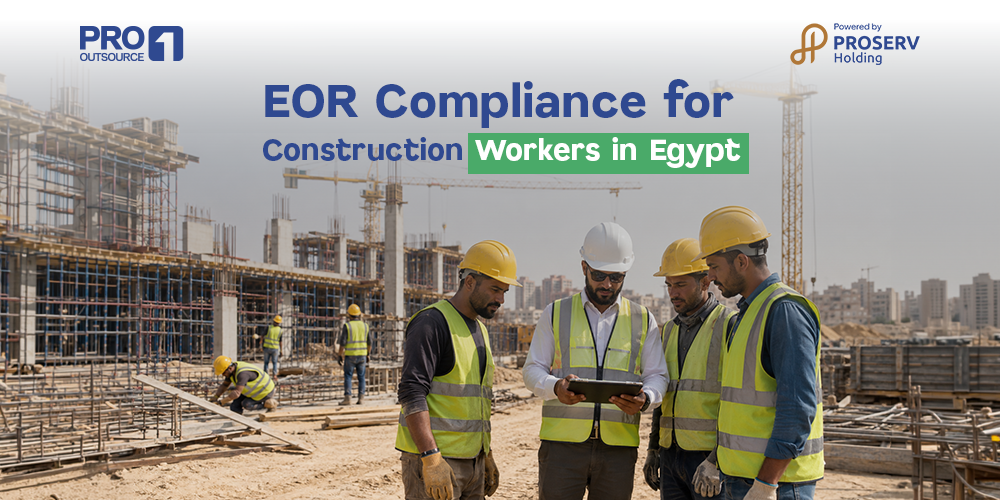
Construction companies often manage changing workforce requirements across different projects, locations, and delivery stages. A project may require additional engineers, supervisors, administrators, document controllers, or support employees during one phase, followed by a smaller team once the work reaches completion.
Although this workforce flexibility is essential for construction operations, every employee still needs to work within a clear and documented employment structure.
Employment contracts, social insurance registrations, employee records, monthly documentation, and labour compliance responsibilities must be managed correctly throughout the project. When these responsibilities are handled informally or inconsistently, construction companies may face missing records, unclear employment relationships, and increased exposure during audits or inspections.
Employer of Record services allow construction companies to maintain operational control over their teams while placing the legal and administrative employment responsibilities within a structured framework.
Why Construction Workforce Compliance Is Complex
Construction workforce requirements rarely remain the same throughout an entire project.
The number and type of employees needed may change between:
- Site preparation
- Structural work
- Mechanical and electrical installation
- Finishing activities
- Testing and commissioning
- Project handover
- Post-handover support
Each stage can require different technical, administrative, and supervisory employees.
This creates a challenge for companies managing workers across short-term, medium-term, or project-based arrangements. Even when an employee is only required for a specific stage, the company must maintain clear contracts and organised employment documentation.
Without a consistent process, documents can become scattered between project managers, HR teams, site offices, and external service providers.
What Is EOR Compliance for Construction Workers?
An Employer of Record arrangement separates operational management from legal employment administration.
The construction company continues to manage the workers’ daily responsibilities. It assigns tasks, defines working requirements, supervises performance, and controls project delivery.
The EOR provider becomes the legal employer and manages the administrative employment framework, including:
- Employment contract issuance
- تسجيل الموظفين في التأمينات الاجتماعية
- Employee file management
- Labour compliance documentation
- Monthly employment reporting
- Employer-side administrative obligations
This structure allows the construction company to focus on completing the project while the EOR provider maintains the required employment records.
Clear Contracts for Project-Based Employees
Every construction worker or employee should have a contract that clearly documents the employment relationship.
This is particularly important when companies manage employees across multiple projects or contract periods. The duration of the project, the employee’s position, and the employment structure should be properly documented rather than managed through informal agreements.
An EOR provider prepares and issues employment contracts as part of the legal employment framework.
The contract documentation gives the company a clear record of who is employed, under which structure, and for what period. It also supports consistency when several employees are added to a project at different stages.
Social Insurance Registration
Social insurance registration is a major part of workforce compliance in Egypt.
Construction companies may struggle to manage registrations internally when employees frequently move between projects or when the company needs to expand its team within a limited period.
An EOR provider manages social insurance registration and maintains the related employment documentation.
This gives the construction company a clearer administrative process and reduces the risk of employee files being incomplete or registrations being overlooked during busy project periods.
The EOR structure also provides the company with regular records that can be reviewed by its management, finance, or compliance teams.
Organising Construction Employee Files
Employee documentation should be maintained as carefully as project contracts, technical drawings, and progress reports.
A structured employee file may include:
- Employment contracts
- Personal identification documents
- Social insurance records
- Position and employment information
- Relevant employment forms
- Monthly records
- Compliance documentation
When employee files are maintained through a centralised process, the construction company can retrieve information more easily during internal reviews, client requests, or regulatory inspections.
Centralised records also reduce the risk of documents being stored separately by individual project managers or site administrators.
Preparing for Audits and Inspections
Construction companies may be required to provide employment documents during audits, inspections, client reviews, or internal governance checks.
Trying to collect missing records after a review has already started can place significant pressure on HR and project administration teams.
An audit-ready EOR structure keeps employee contracts, social insurance documents, employment records, and monthly reports organised throughout the employment period.
This means the company does not need to rebuild each employee file whenever documentation is requested.
Audit readiness is particularly important for construction companies working with large developers, multinational clients, or organisations that apply strict supplier and contractor governance requirements.
Managing Workers Across Multiple Projects
A construction company may operate several projects at the same time. Each project can have a different location, timeline, workforce size, and reporting structure.
Without a unified employment framework, workforce documentation may be managed differently from one project to another.
One project may maintain complete employee files, while another may depend on incomplete spreadsheets or documents stored at the site level.
An EOR arrangement provides a more consistent structure across the company’s Egypt-based workforce.
The same process can be applied to contracts, registrations, employee files, and monthly compliance reports, regardless of the project on which each employee is working.
Adjusting Team Size as Projects Progress
Construction projects require workforce flexibility.
A company may need to add employees when work accelerates, maintain a larger team during critical stages, and reduce the workforce after major deliverables have been completed.
However, changing workforce size should not mean changing the company’s entire employment framework every time a project enters a new phase.
An EOR structure supports companies that need to adjust their teams without creating a new legal and administrative setup from the beginning.
The construction company decides which positions are operationally required, while the EOR provider manages the related employment documentation and legal framework.
The Construction Company Keeps Operational Control
Using an EOR does not transfer project management or workforce supervision to the provider.
The construction company remains responsible for:
- Assigning daily responsibilities
- Managing working schedules
- Supervising site activities
- Monitoring employee performance
- Applying health and safety procedures
- Setting project priorities
- Reviewing work quality
- Managing technical delivery
The EOR provider focuses on the legal, administrative, and compliance side of employment.
This distinction allows construction companies to retain full control over project execution while receiving specialised support for workforce documentation.
Monthly Workforce and Compliance Reporting
Construction workforce compliance requires continuous monitoring.
Employee information may change during the project. New workers may join, other employees may leave, and project teams may be transferred between different assignments.
Monthly reports help the company maintain an updated view of its workforce structure.
Depending on the engagement, reporting may include:
- Current headcount
- Employee status updates
- Social insurance documentation
- Employment record updates
- Compliance summaries
- Required administrative actions
A regular reporting structure gives management better visibility and helps prevent documentation issues from remaining unnoticed until the end of the project.
Reducing Workforce Misclassification Risk
Informal employment arrangements can make it difficult to demonstrate the legal status of people working on a construction project.
When employment relationships are not documented clearly, questions may arise regarding worker classification, contractual responsibility, and employer obligations.
An EOR framework creates a defined legal employment relationship.
The EOR provider becomes the official employer, while the construction company retains operational management. This division of responsibilities helps create a more defensible and transparent workforce structure.
How PRO 1 Outsourcing Supports Construction Companies
PRO 1 Outsourcing provides EOR services for companies that need to manage employees in Egypt through a documented employment framework.
PRO 1 Outsourcing becomes the legal employer and manages employment contracts, social insurance registration, employment files, compliance records, and monthly reporting.
The construction company continues to manage the employees’ daily work, site responsibilities, schedules, performance, and project deliverables.
This model is suitable for construction businesses managing project-based or contract-based teams, as well as companies that need to organise workforce records before an audit, inspection, or internal review.
PRO 1 Outsourcing follows a governance-led approach focused on structured documentation, clear audit trails, and ongoing compliance management.
Build a Compliant Construction Workforce
Construction workforce flexibility should be supported by clear employment records.
As project requirements change, companies need a framework that allows them to adjust their teams without losing control of contracts, social insurance registrations, employee files, or compliance documentation.
EOR services provide a clear separation between project management and legal employment administration.
The construction company manages the work. The EOR provider manages the employment framework.
Through PRO 1 Outsourcing, construction companies can organise their Egypt-based workforce, maintain audit-ready records, and support project growth through a more structured compliance system.