

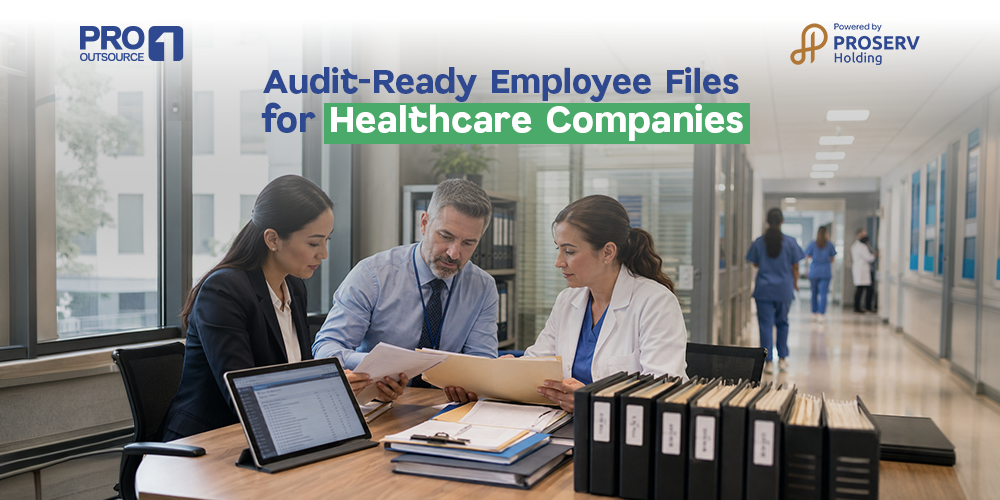
Healthcare companies operate in an environment where documentation, accountability, and regulatory compliance are essential. While clinical records and operational procedures usually receive significant attention, workforce documentation must also be accurate, organised, and ready for review.
Every employee working within a healthcare organisation should have a clear employment file containing the necessary contracts, registration records, and supporting documents. This applies to administrative employees, finance teams, technical support staff, customer service employees, coordinators, and other non-clinical or operational roles.
When employee documents are incomplete or stored across different departments, the company may struggle to respond efficiently to an audit, inspection, or internal review.
Employer of Record services help healthcare companies establish a structured employment framework in which employee records are continuously maintained instead of being assembled only when they are requested.
Why Employee File Management Matters in Healthcare
Healthcare companies are expected to maintain high standards of governance and documentation.
This requirement is not limited to patient care. It also applies to the people who support the organisation’s daily operations.
A healthcare employee file may be needed during:
- Internal compliance reviews
- Labour inspections
- Social insurance reviews
- Client or partner audits
- Financial due diligence
- Management investigations
- Workforce classification checks
- Corporate governance assessments
If the required documents are not available, the organisation may need to search through emails, spreadsheets, paper files, and different departmental records.
This process can delay the review and reveal inconsistencies between the employee’s actual status and the information stored by the company.
What Is an Audit-Ready Employee File?
An audit-ready employee file is a structured and retrievable record containing the documents required to demonstrate a clear employment relationship.
It should not depend on one HR employee remembering where each document is stored. The file should follow a consistent structure that can be understood and reviewed by authorised stakeholders.
Depending on the employee and the employment arrangement, the file may contain:
- A documented employment contract
- Personal identification documents
- Social insurance registration records
- Employment commencement information
- Position and workforce details
- Relevant employment forms
- Monthly workforce records
- Compliance documentation
- Updates made during the employment period
The goal is not simply to collect documents. The goal is to maintain an organised record that reflects the employee’s current legal and administrative status.
Common Problems with Healthcare Employee Records
Healthcare companies may employ people across multiple branches, facilities, departments, or operational units.
When every location follows a different documentation process, employee files can quickly become inconsistent.
Common problems may include:
- Missing employment contracts
- Outdated employee information
- Incomplete social insurance records
- Documents stored only at branch level
- Different file formats across departments
- Unclear employee classifications
- Records that are difficult to retrieve
- Missing updates after employee status changes
These issues may remain unnoticed during normal operations. They often become visible when an auditor, inspector, client, or senior manager requests a complete employment record.
How EOR Services Create a Documented Framework
Under an Employer of Record arrangement, the EOR provider becomes the legal employer of the workforce and manages the administrative and compliance side of employment.
The healthcare company keeps full control over daily work, operational responsibilities, task assignment, and performance management.
The EOR provider handles the employment framework, including:
- Issuing employment contracts
- Managing social insurance registration
- Maintaining employee records
- Applying labour compliance requirements
- Preparing monthly compliance reports
- Keeping documentation ready for review
This division allows the healthcare company to continue managing its operation while the legal employment records are maintained through a centralised system.
Standardised Employment Contracts
A complete employee file begins with a properly documented employment contract.
Healthcare companies may have employees working under different roles, locations, and operational arrangements. Without a standard process, the level of documentation may vary between departments.
An EOR provider issues and maintains employment contracts through a consistent framework.
This helps establish:
- The legal identity of the employer
- The employee’s documented position
- The employment commencement date
- The agreed employment structure
- The responsibilities of each party
- A clear record of the employment relationship
Standardisation makes it easier to review employee files across the organisation and identify whether any information is missing.
Social Insurance Records
Social insurance documentation is another important part of an audit-ready workforce file.
Registration information should be maintained and connected to the relevant employee record. If these documents are stored separately or managed through informal processes, it may become difficult to confirm whether the employee’s administrative status is complete.
Through an EOR framework, social insurance registration is managed as part of the onboarding and workforce documentation process.
This creates a clearer connection between the employee contract, registration records, and ongoing employment information.
Centralised Employee Documentation
Healthcare organisations often have multiple stakeholders involved in workforce administration.
HR may manage contracts, finance may hold payment records, branch managers may keep personal documents, and compliance teams may request information separately.
When documents are distributed across different functions, no single file provides a complete view of the employee relationship.
An EOR service centralises the legal and administrative employment records.
Centralised documentation helps healthcare companies:
- Retrieve files more quickly
- Apply consistent record standards
- Reduce duplicate information
- Identify missing documents
- Maintain clearer audit trails
- Improve management visibility
- Support internal compliance reviews
It also reduces the organisation’s dependence on manual document collection whenever information is requested.
Keeping Employee Files Updated
An employee file should not remain unchanged after onboarding.
Employee information may need to be updated when:
- The employee changes position
- The employee moves to another branch
- Contract details are amended
- Employment status changes
- New documents are issued
- Social insurance information is updated
- The employee leaves the organisation
If these changes are not reflected in the file, the documentation may no longer match the actual employment relationship.
An ongoing EOR service maintains employee records throughout the employment period and supports regular updates through monthly compliance reporting.
Preparing for Audits and Inspections
Audit preparation should be a continuous process rather than an emergency response.
When documentation is kept in a structured and retrievable format, healthcare companies can respond more efficiently to requests from auditors, inspectors, management teams, clients, or authorised partners.
An audit-ready framework helps the organisation provide:
- Complete employee contracts
- Current workforce information
- Social insurance records
- Compliance documentation
- Monthly employee summaries
- Clear historical records
- Evidence of documented employment relationships
This does not remove the need for internal governance. However, it gives the organisation a stronger and more organised foundation for workforce reviews.
Supporting Multi-Branch Healthcare Operations
Healthcare companies with multiple branches may find it difficult to maintain the same employment documentation standards across every location.
One branch may have complete files, while another may keep only basic documents. This creates inconsistency at the organisational level.
An EOR framework applies one employment documentation process across the covered workforce.
Contracts, registrations, employee records, and monthly reports are managed through a central structure, regardless of where the employee performs the daily work.
This supports greater consistency between branches and gives central management a clearer view of the workforce.
Reducing Workforce Classification Risk
Healthcare organisations may work with employees, project-based personnel, contractors, and other workforce categories.
When these relationships are not documented correctly, questions may arise about who the legal employer is and which obligations apply.
An EOR arrangement creates a defined legal employment structure.
The EOR provider becomes the legal employer, while the healthcare company retains control over daily work and performance.
This documented separation can help reduce uncertainty around employee classification and create a clearer compliance trail.
Monthly Compliance Reporting
Audit readiness depends on current information.
A file that was complete six months ago may no longer reflect the employee’s current position or employment status.
Monthly compliance reports provide regular visibility into the workforce and the status of its documentation.
These reports may include:
- Current headcount information
- Employee status updates
- Social insurance statements
- Employment file updates
- Compliance summaries
- Outstanding administrative actions
Regular reporting helps healthcare management identify gaps early rather than discovering them during an audit.
How PRO 1 Outsourcing Supports Healthcare Companies
PRO 1 Outsourcing provides an EOR framework for companies that need to organise and legally manage employees in Egypt.
PRO 1 Outsourcing becomes the legal employer and handles employment contracts, social insurance registration, employee records, labour compliance, and monthly compliance reporting.
The healthcare company continues to direct employees’ daily activities, assign responsibilities, monitor performance, and manage operational standards.
The service is suitable for healthcare companies that need a documented employment structure, centralised employee records, and workforce files that remain ready for audits, inspections, or internal reviews.
PRO 1 Outsourcing follows a governance-led approach based on documented compliance, clear audit trails, structured records, and dedicated account support.
Build a More Audit-Ready Healthcare Workforce
Healthcare companies cannot treat workforce documentation as a secondary administrative task.
Contracts, social insurance records, employment files, and compliance reports should be organised throughout the employment relationship.
An EOR structure allows the healthcare company to keep operational control while a specialised provider manages the legal and administrative employment framework.
With PRO 1 Outsourcing, healthcare organisations can maintain more consistent employee files, improve document accessibility, and prepare their workforce records for audits and reviews through a structured and continuously managed system.